"If you want to know what someone values, observe what they take pictures of"— Some reel on Instagram

Turns screenshots into personal mini-apps
Capturing screenshots is the digital equivalent of taking pictures — a signal of what matters to you. Gyansie detects patterns across content you capture and transforms them into tools you can use.
ACT ONE
Content we care about is scattered across apps, websites, screenshots, documents and more. We save things because we want to use them: to plan that trip, design that room, cook that recipe.
But when it's time to actually use it, we can't remember everything we saved or where it lives. Finding it means shuffling between apps and searching with half-remembered keywords. And even when we find it, it's just scattered pieces. We still have to manually organize it into something we can actually work with.
ACT TWO
What if our devices could continuously spot patterns in what we collect, and build mini-apps that matter to us?
Intelligence on our devices already recognizes subjects, and surfaces knowledge about them. What if it could stitch multiple pieces of content together, and turn them into constantly updating interactive experiences. Like Memories in Photos, but instead of videos, personalized tools built from what you save.
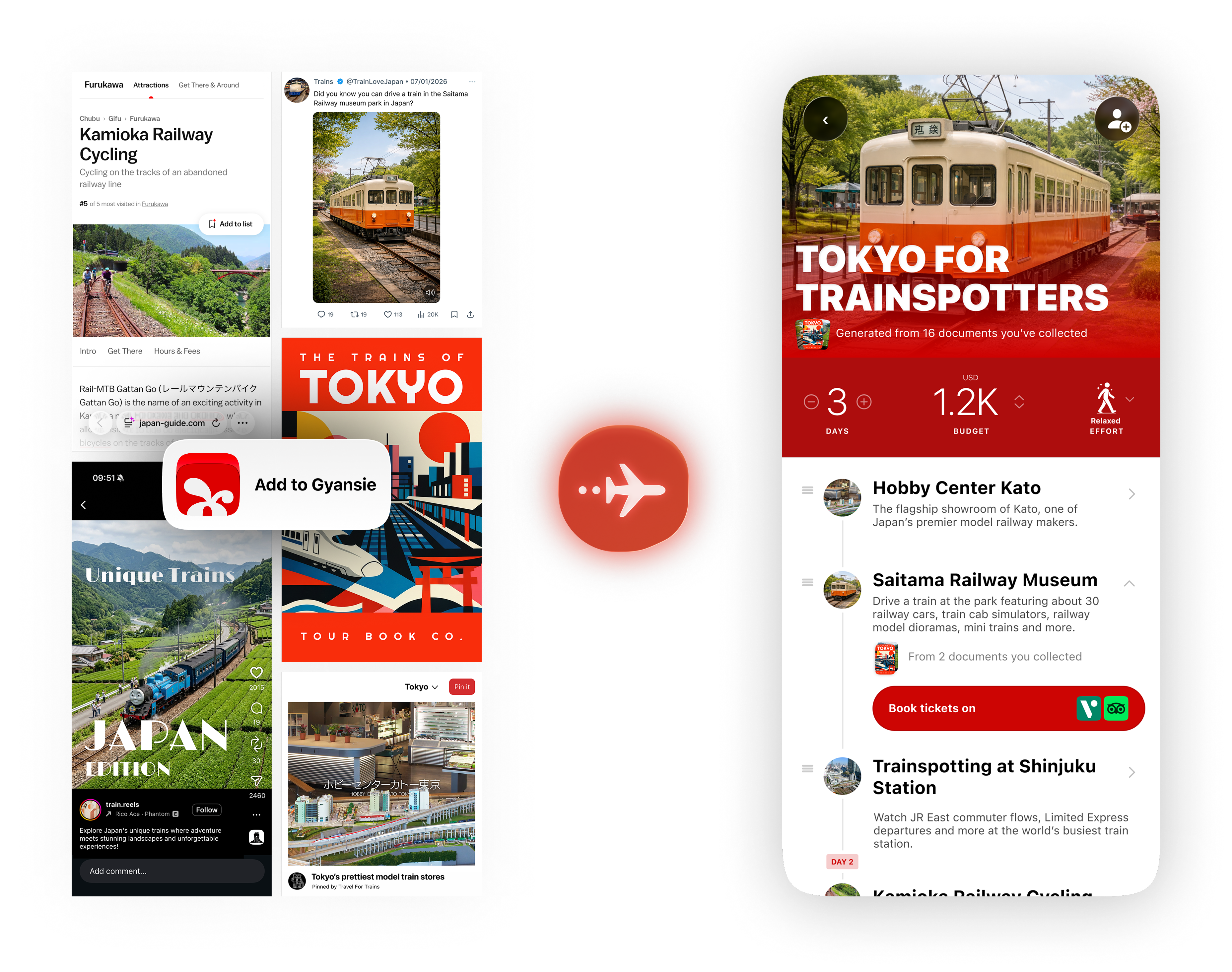
Screenshots of places and trains turning into a travel itinerary inside a dynamically generated Itineraries app.
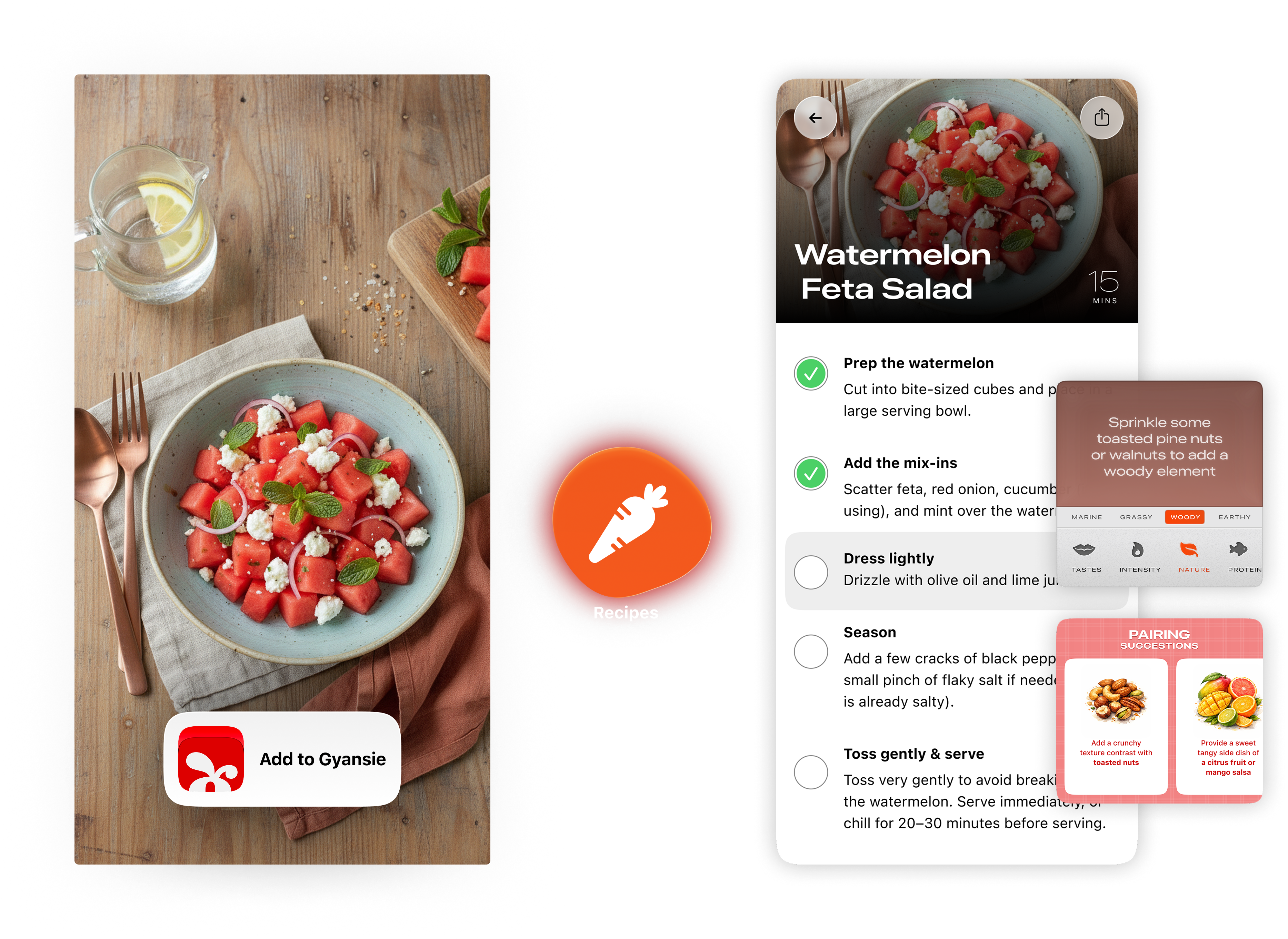
Pictures of well-plated food becoming recipes and interactive cooking companions.
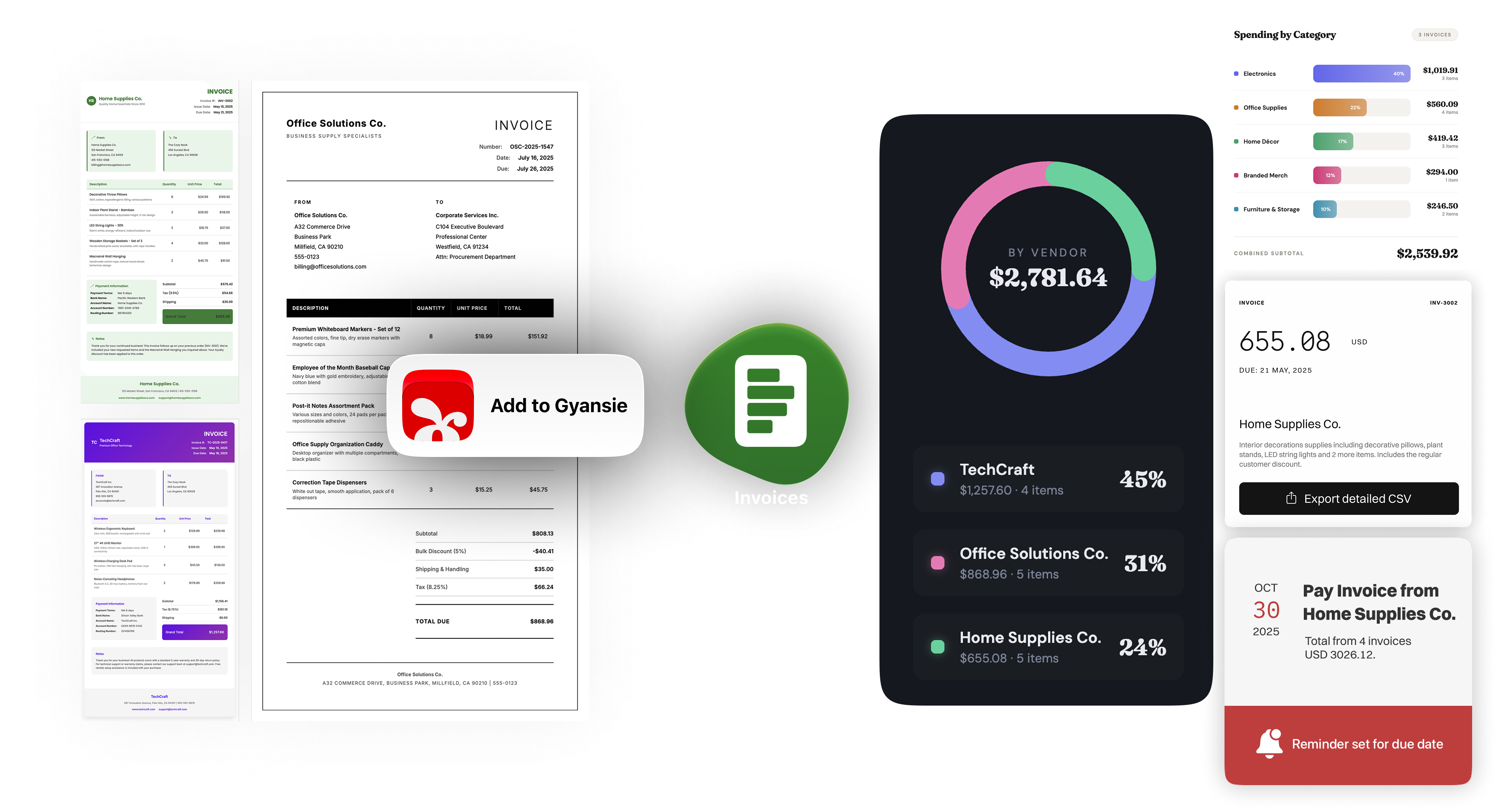
Invoice screenshots and documents turned into due-date reminders and expense-tracking dashboards.
ACT THREE
What if there was a personal knowledge graph shared across devices? Imagine being able to signal interest from any device, app, and content, and it gets added to a smart personal, interconnected map of information.
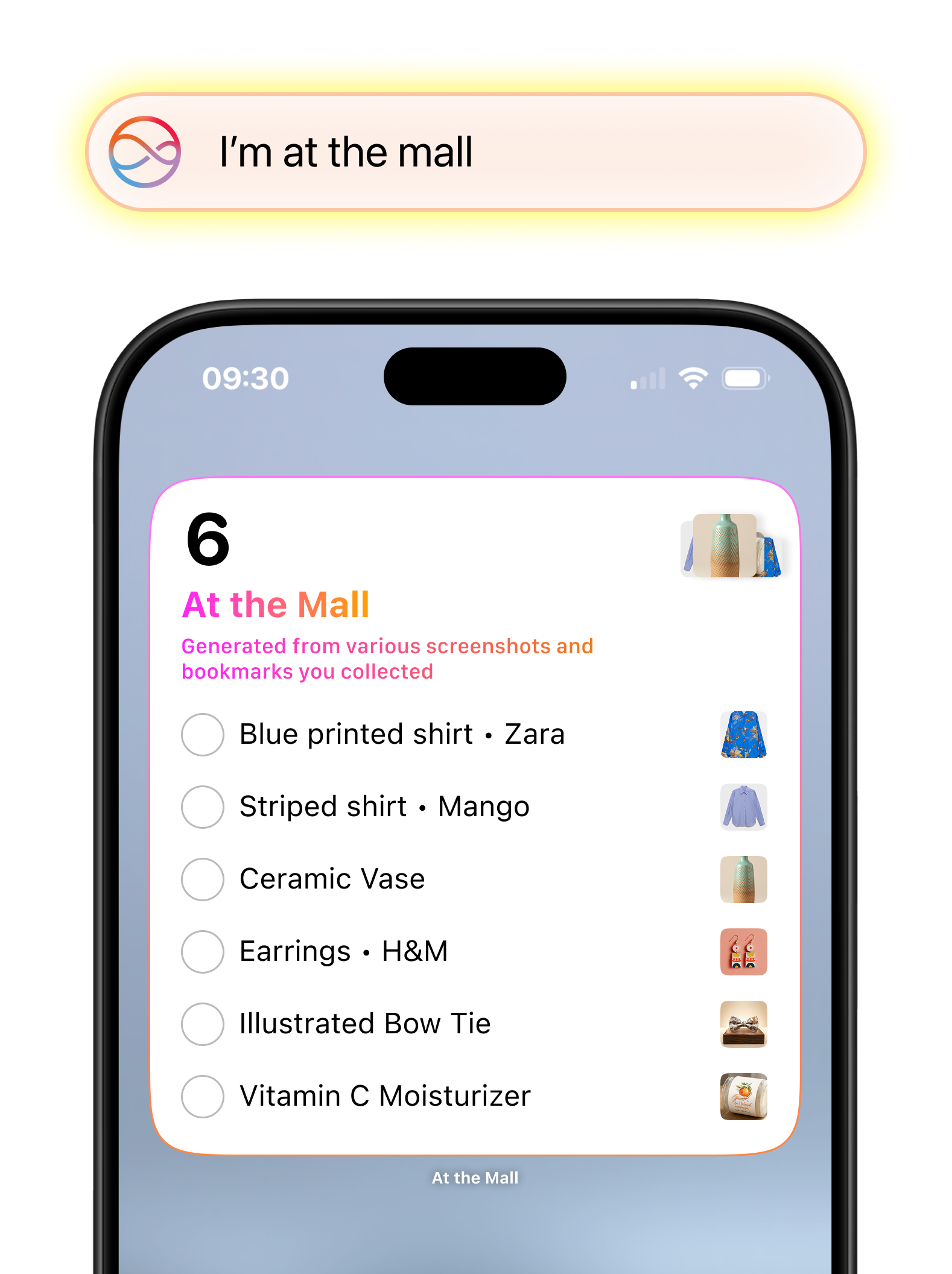
Cross-device intelligence like Siri could pick out relevant content from this pool of a person's interests and generate mini-apps and widgets in response to search queries, time of day, and other signals.
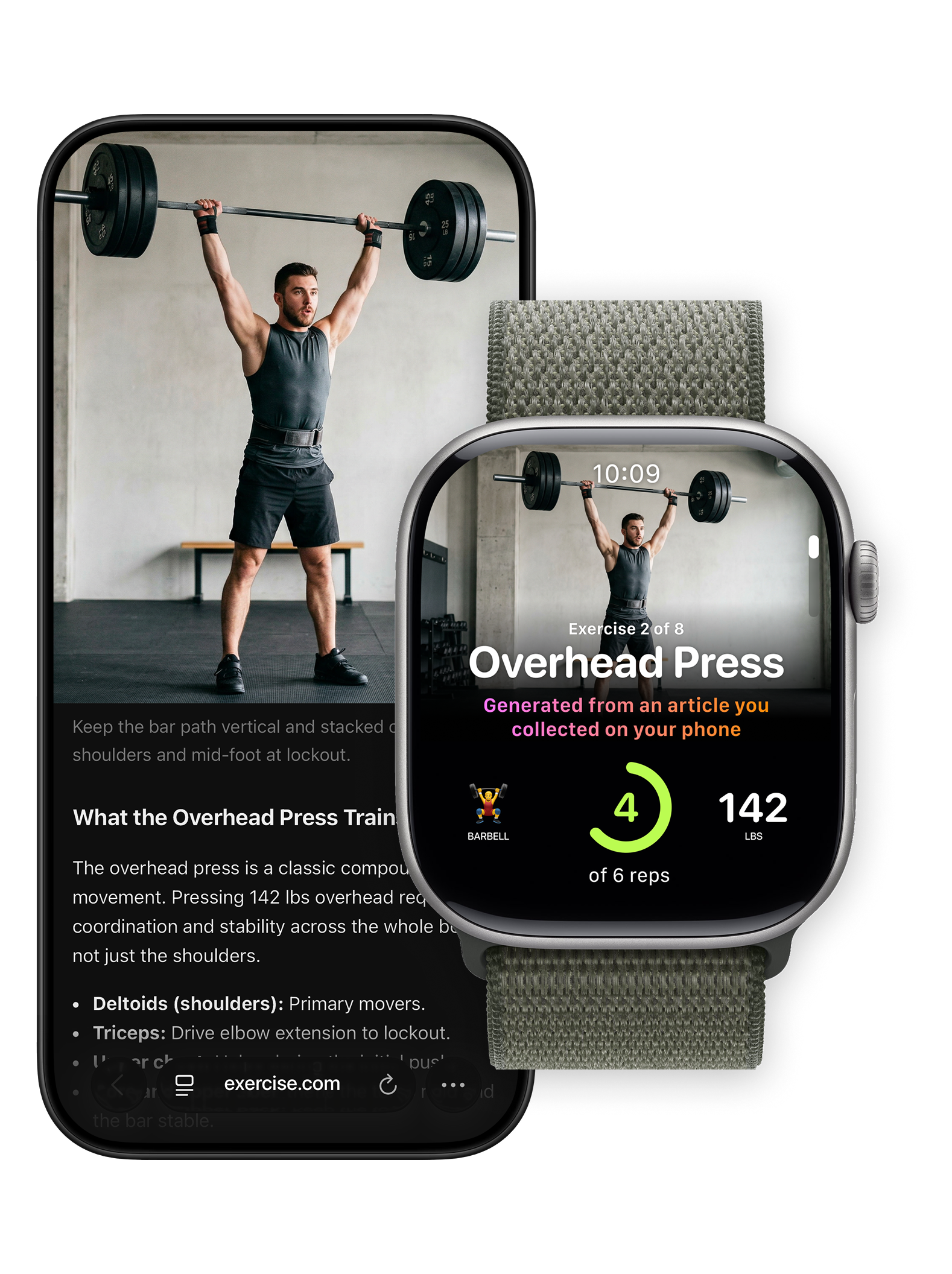
These mini-apps bring information to life by tapping into a device's sensors and hardware, adapting their look and feel to whatever device they're running on.
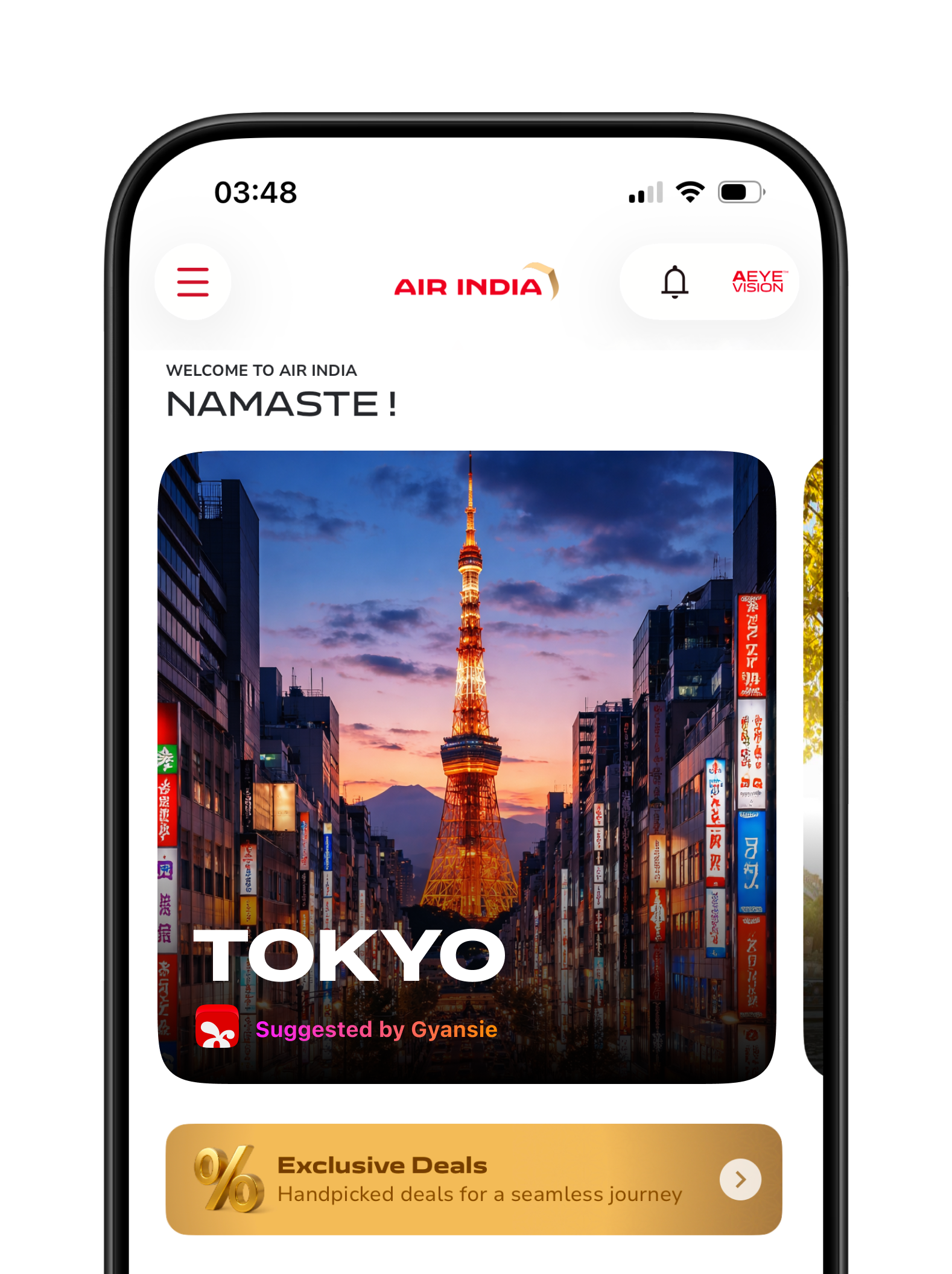
Apps made by external developers could contribute capabilities to these OS-generated apps, or when permitted, use insights from that knowledge graph to tailor their own experiences.
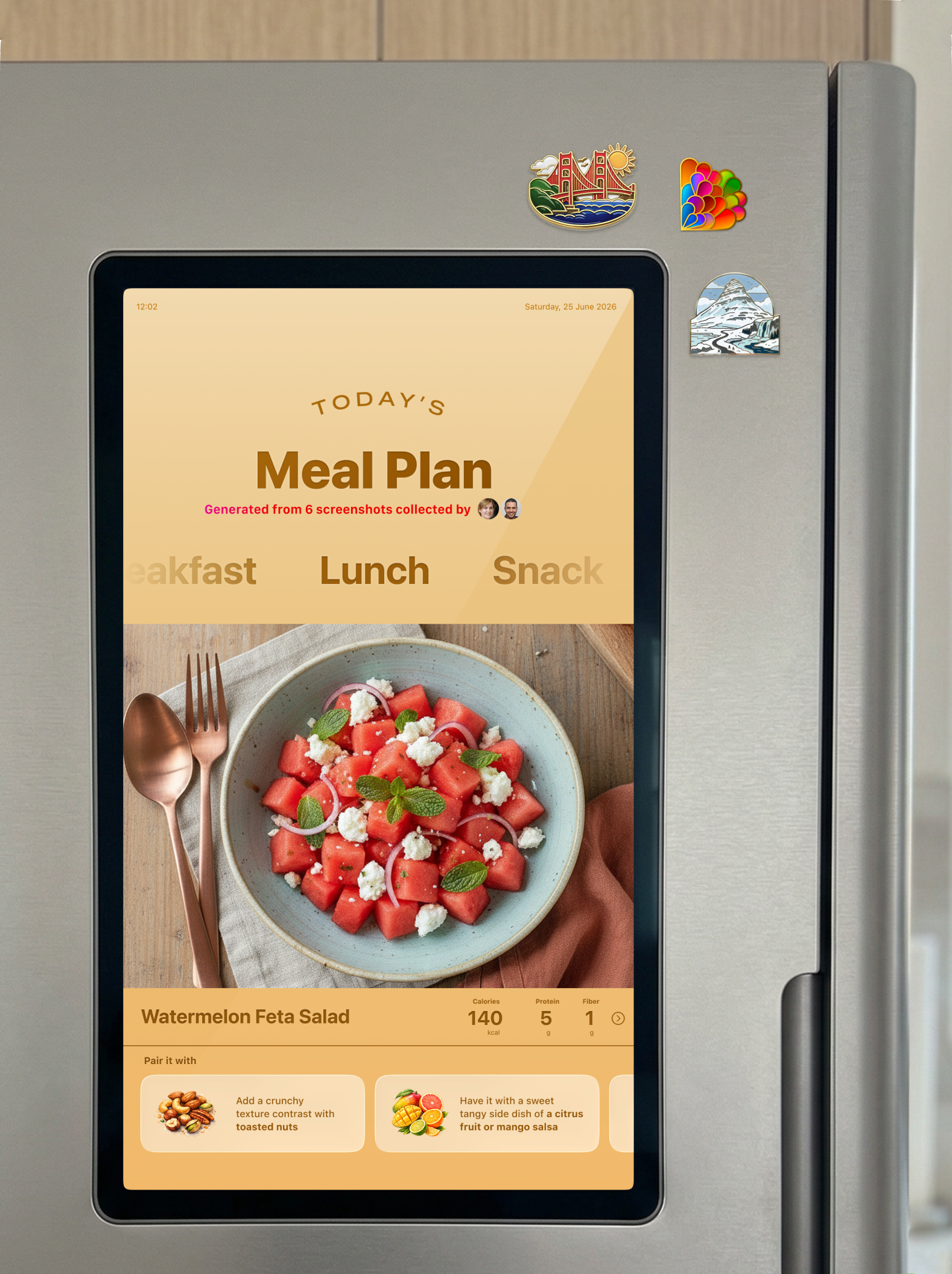
This personal network of interests could also be shared between trusted people like family members and be transformed into experiences that run on shared devices.